
TL;DR: Teething can trigger drooling, gum swelling, irritability, and a mild temperature (under 100.4°F), but it does not cause high fever, diarrhea, or severe illness. Symptoms often peak 4–5 days before a tooth breaks through and fade within a few days. Safe soothers include chilled teethers, gum massage, and weight-appropriate acetaminophen. Call your pediatrician if your baby has a fever over 100.4°F, a rash, vomiting, or extreme distress. You’ve got this.

Common Teething Signs: What Your Baby Might Be Doing
You know your baby better than anyone. So when they suddenly start drooling oceans, gnawing on every fist in sight, or waking more often at night, it’s natural to wonder if teething is the culprit. A comprehensive meta-analysis found that 70.5% of infants experience at least one sign or symptom during tooth eruption, but in many families, it feels closer to 100%. The most frequent — and normal — teething signals include:
- Excessive drooling – This is often the first sign. Your baby might suddenly soak through bib after bib. Saliva production ramps up, sometimes weeks before you see a tooth.
- Chewing and biting behavior – A recent global review identified increased biting as the single most common local symptom, affecting roughly 65.9% of teething infants. Babies instinctively press their gums to relieve the deep pressure.
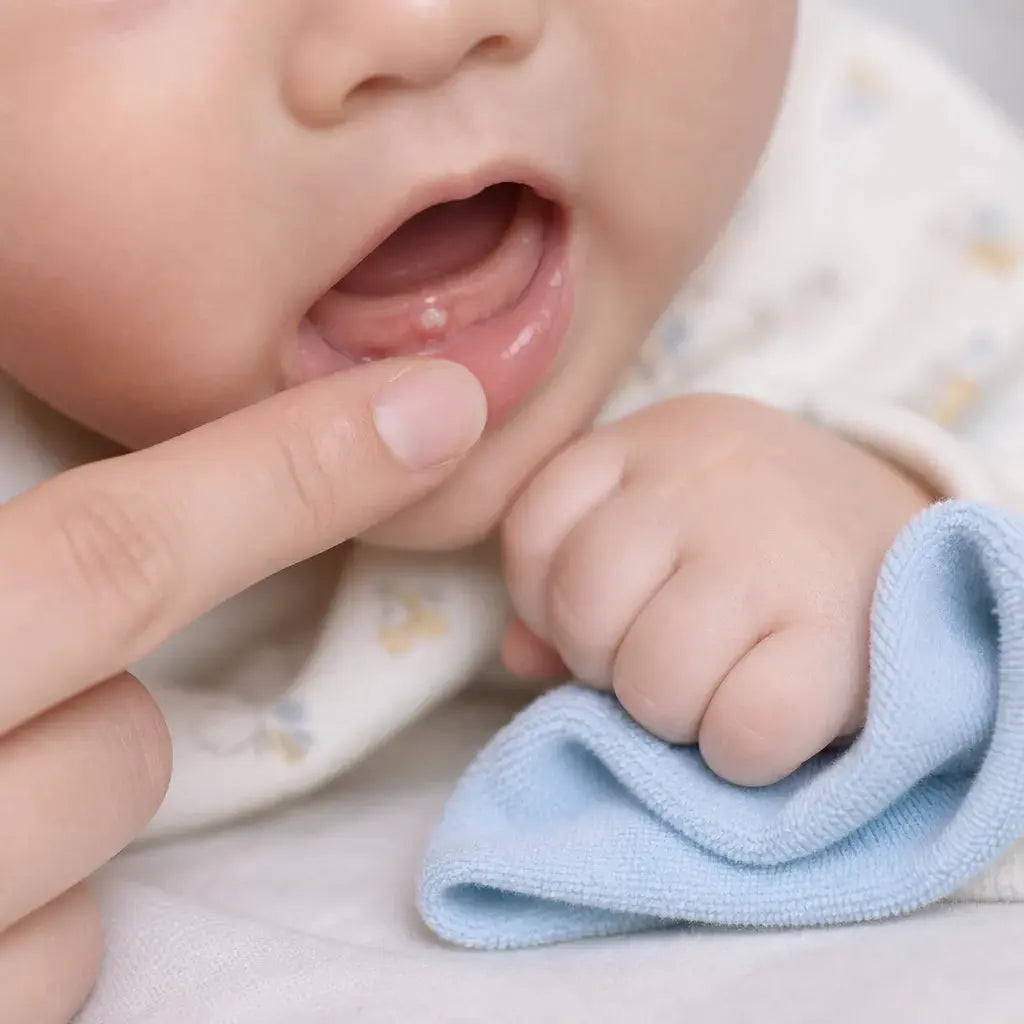
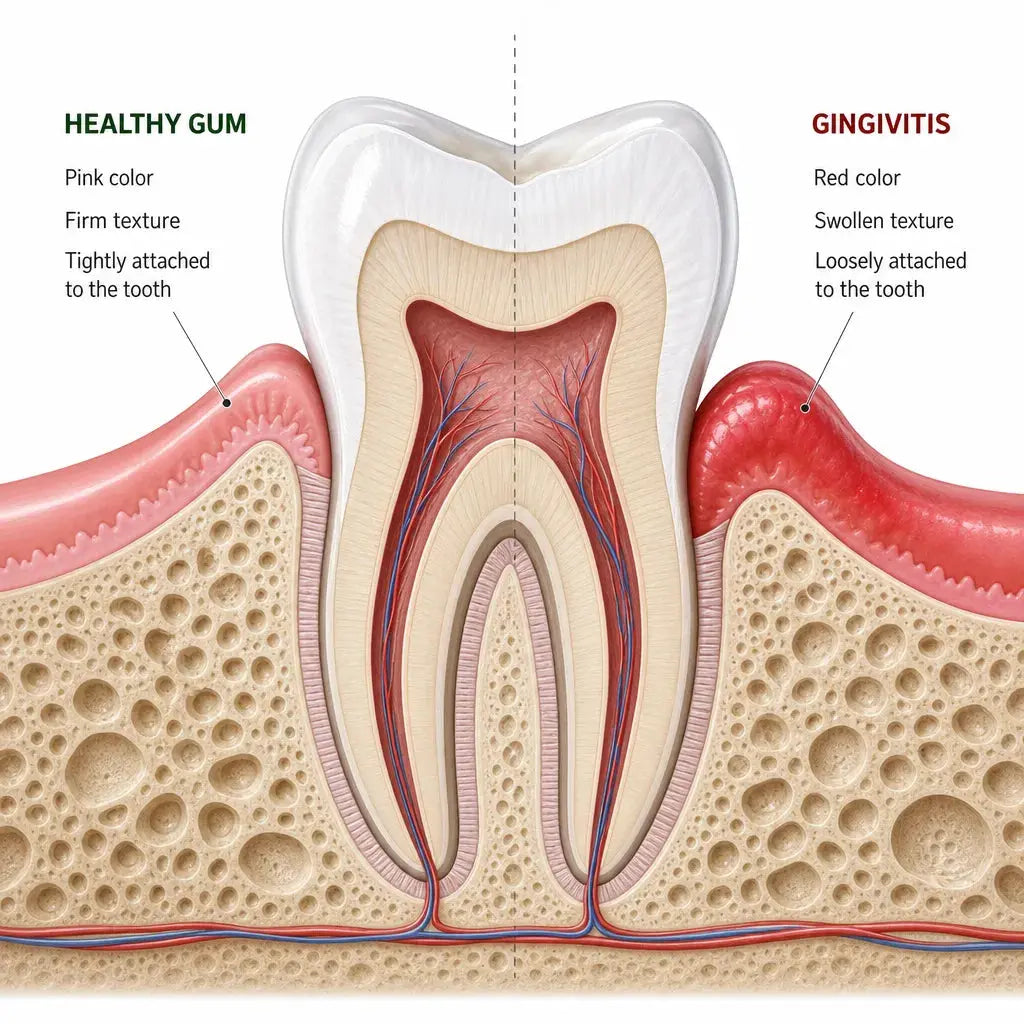
- Gum swelling and redness – If you manage to peek inside that tiny mouth, you may notice the gum tissue looks puffy, pink, and almost bruised right where a new tooth is pushing through.
- Irritability and fussiness – Unsurprisingly, tender gums make for a cranky baby. Irritability was reported by nearly 68% of parents in clinical studies.
- Ear pulling and cheek rubbing – The nerves that supply the lower jaw also loop near the ear. So when molars or other teeth are coming in, many infants pull at the same-side ear or rub their cheek, which can be easy to mistake for an ear infection.
- Disrupted sleep and feeding changes – The discomfort doesn’t punch a time clock. You may notice more night wakings, a dip in appetite, or breast refusal because sucking creates additional pressure on sore gums.
None of these symptoms mean you’re doing anything wrong. They’re simply a baby’s way of saying, “Something feels different in here.” And while it’s messy, exhausting work for both of you, it’s also temporary.
The Symptoms That Confuse Parents: Fever, Diarrhea & More
This is where even the most seasoned parents get tripped up. You may have heard that teething causes fever, diarrhea, or even a full-body rash. But the evidence paints a different picture — and understanding it can save you a lot of worry.
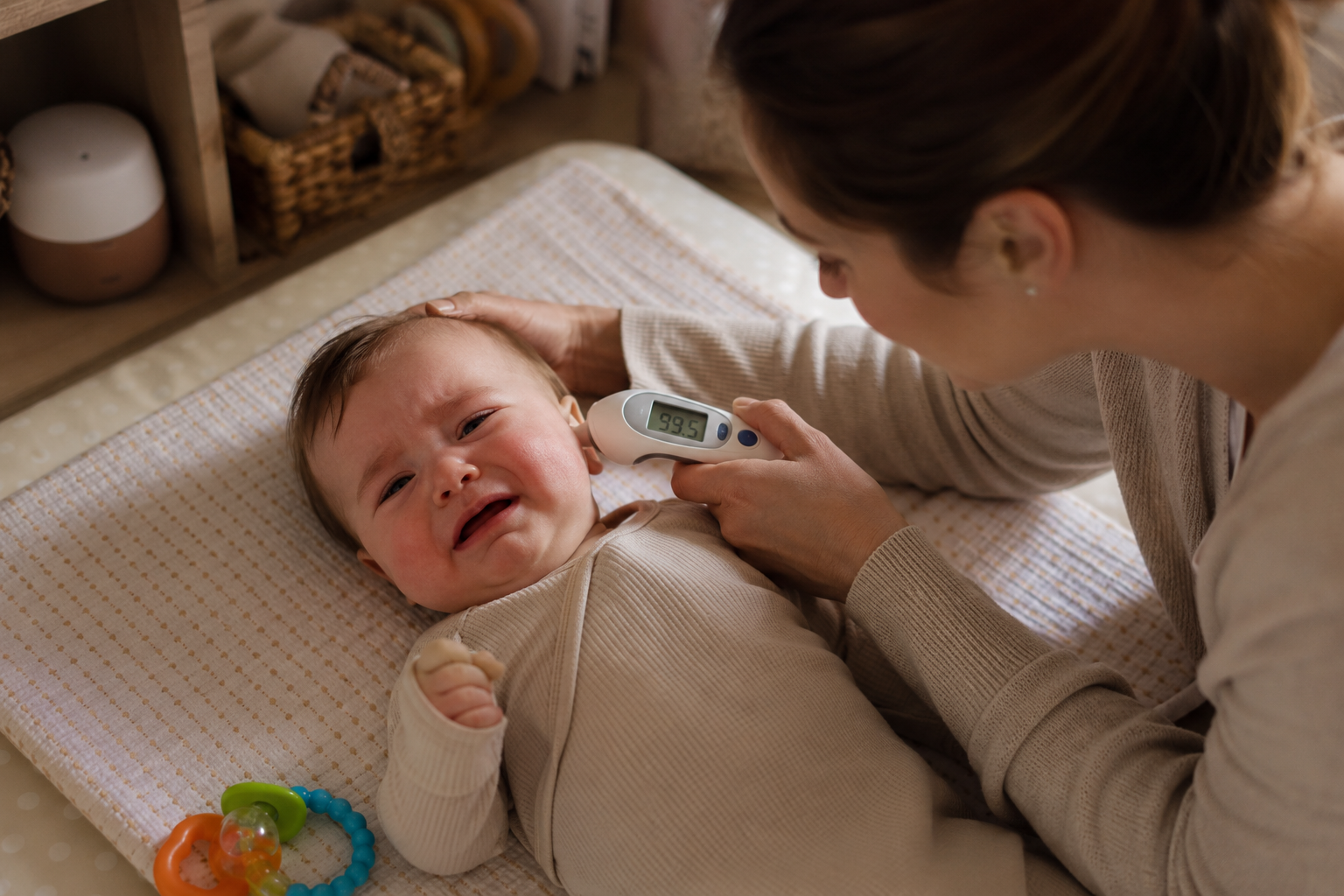
Low-grade fever is the most debated symptom. Some studies report a tiny uptick in temperature on the day a tooth breaks through, but it’s not what a pediatrician would call a fever. A landmark prospective study that tracked 475 tooth eruptions found that temperatures associated with teething were only mildly elevated — no infant ever spiked a fever of 104°F, and even temperatures above 102°F were not linked to teething. A systematic review dedicated solely to this question eventually concluded that, taken as a whole, the data do not support a true association between teething and fever. When rectal thermometers were used in some studies, a small link appeared, but at most it pointed to a borderline reading — not the kind of elevated temperature that screams infection.
Key number: If your baby’s temperature hits 100.4°F (38°C) or higher, assume it’s not the teeth. That threshold marks a true fever, and it warrants a call to your pediatrician.
Diarrhea is another classic misattribution. While some parents notice slightly looser stools during teething — likely because all that extra drool changes gut motility — the same prospective research found no significant increase in stool frequency or looseness that could be attributed to tooth emergence. True, persistent diarrhea should never be dismissed as “just teething.” It’s far more likely a coincidental stomach bug or dietary reaction.
By giving yourself permission to pigeonhole these symptoms correctly, you protect your baby from missed infections. Teething may make a child generally miserable, but it does not make a child systemically ill.
How Long Teething Lasts (and When Teeth Actually Cut Through)
You won’t be in this phase forever — it comes in waves. Research suggests there’s a predictable teething window around each new tooth. Macknin and colleagues defined that window as the four days before a tooth emerges, the day of eruption, and the three days after — eight days total where symptoms are statistically more frequent. After that? Things calm down until the next tooth starts its journey.
The teething timeline follows a rough schedule, though every baby is different:
- Central incisors (front teeth): 6–12 months
- Lateral incisors: 9–16 months
- First molars: 13–19 months (these can be especially uncomfortable — they’re big and blunt)
- Canines (cuspids): 16–23 months
- Second molars: 23–33 months
Most babies get their very first tooth between 4 and 7 months. And here’s something to tuck away for later: as soon as that tiny pearl breaks through the gum, it’s time to start a simple oral care routine. A soft-bristled electric toothbrush can gently sweep the new tooth clean while helping your baby get used to the sensation — turning brushing into a natural part of the day right from the start.
Could It Be Something Else? When to Call the Pediatrician
You aren’t overreacting when you pick up the phone. Trust your gut. If any of these red flags appear alongside what you think might be teething, the cause is almost certainly not just the teeth — and a medical evaluation is the safest next step:
- Fever of 100.4°F (38°C) or higher that persists
- Vomiting or true, watery diarrhea
- Full-body rash, especially if accompanied by fever
- Extreme, unconsolable distress that doesn’t ease with hugging, cuddling, or feeding
- Signs of ear pain (fluid draining, severe head shaking, night-waking screams) that could point to an ear infection, not teething-referred discomfort
- Refusal to drink liquids to the point of dehydration (fewer wet diapers, dry mouth)
Teething and common childhood viruses overlap frequently in the first 18 months of life. It’s entirely possible for your baby to have a real ear infection and a tooth erupting at the same time. By treating every high fever or change that worries you as a separate concern, you’re not being a nervous parent — you’re being a thorough one.

Quick Comfort Measures That Actually Work
You don’t need a cabinet full of products. The simplest, research-backed tools tend to be the most effective.
Safe, proven soothers
- Chilled (not frozen) teething rings or washcloths – The cold numbs gently and the firm texture relieves pressure. A clinical trial by Memarpour et al. found that teething rings, cuddle therapy, and gum massage earned the highest satisfaction from parents.
- Gentle gum massage – Using a clean finger to rub the swollen area for a minute or two can dial down the crying almost instantly. It’s one of the few interventions that provide direct counterpressure.
- Cool foods – If your baby has started solids, a mesh feeder filled with chilled (not frozen) banana or applesauce can be a chilled treat that also cleans the mouth.
- Weight-based acetaminophen or ibuprofen – For infants older than 6 months, a doctor-approved dose of a single-ingredient pain reliever can buy everyone a few hours of relief, especially overnight. Always dose by weight, not age, and never combine medications without guidance.
What to skip — and why
Some popular products carry serious risks:
- Benzocaine gels (like Orajel™ and similar brands) – The FDA has issued a strong warning: benzocaine can cause methemoglobinemia, a dangerous drop in blood oxygen, and should never be used for teething.
- Lidocaine-based gels – A review of the evidence found limited proof they even work, along with reports of seizures, respiratory distress, and fatalities in babies. Both the American Academy of Pediatrics and the Australian and New Zealand Society of Paediatric Dentistry advise against topical anesthetics for teething.
- Homeopathic teething tablets – Many formulations have been recalled after lab tests revealed inconsistent amounts of belladonna, a toxin.
- Amber necklaces – These pose a strangulation and choking hazard without any proven benefit.
When the sharpest phase of gum pain starts to ease and a tooth is fully visible, cleaning it becomes the new priority. A low-frequency electric toothbrush offers just the right amount of gentle vibration — enough to clean the tiny new tooth while softly massaging the surrounding gum, so the brushing routine feels soothing rather than jarring.
A Moment of Reassurance
Teething is messy. It’s confusing. It steals sleep from both of you — and then, just when you think you’ve memorized each whimper’s meaning, a new tooth pops up and the cycle shifts. The fact that you’re here, reading this, learning the difference between a true fever and a teething temperature, means you’re paying attention.
Your vigilance is what keeps your baby safe. Your willingness to seek answers is what makes you exactly the parent this child needs.
Soon the gummy smile will be filled with tiny teeth, and you’ll have a whole new set of adventures — starting with the brushing routine you’ve already begun. For now, hold on to the fact that this, too, shall pass. And if you ever wonder whether you should call the pediatrician? Call. Trusting your instincts is the first rule of good parenting.




Leave a comment
Situs ini dilindungi oleh hCaptcha dan berlaku Kebijakan Privasi serta Ketentuan Layanan hCaptcha.